Flowers for Sukkot: Your 2026 guide to traditions and decorations
Flowers for Sukkot bring warmth, color, and a welcoming atmosphere to one of the most joyful celebrations in the Jewish calendar. After the solemn days of Rosh Hashanah and Yom Kippur, Sukkot invites families to step outside, gather beneath a roof of natural greenery, share festive meals, and celebrate the blessings of the harvest.
For seven days, an ordinary outdoor space becomes a place of hospitality, tradition, and connection. A beautifully prepared sukkah may welcome grandparents, children, friends, neighbors, and guests who have never experienced the holiday before. The table fills with food, conversations continue into the evening, and even a simple meal can become a cherished family memory.
Fresh flowers are a natural addition to this setting. A basket of garden roses, a cheerful arrangement with yellow blooms and citrus, or a delicate centerpiece surrounded by greenery can make the sukkah feel like an extension of the family home.
At EsteeFlower, we believe that holiday flowers should complement the occasion rather than compete with it. For Sukkot, that means creating arrangements that celebrate nature, fit comfortably into an outdoor setting, and leave plenty of room for the people and traditions at the heart of the holiday.
Whether you are preparing a sukkah in Miami, hosting a family dinner in Aventura, or sending a holiday gift to loved ones in Hollywood or Hallandale Beach, our Sukkot flower collection offers beautiful ways to share the joy of the season.
Explore our Sukkot collection.
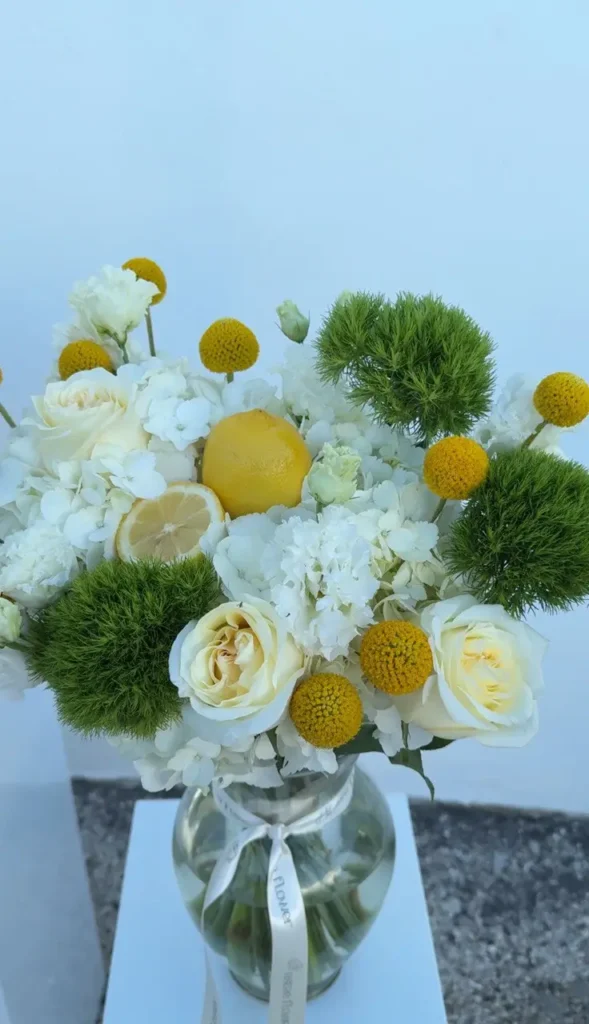
Sukkot Bouquet Citrus Garden with lemons, white hydrangea and roses
What is Sukkot? The history and meaning of the holiday
Sukkot, also known as the Feast of Tabernacles or Feast of Booths, is a seven-day Jewish festival that begins on the 15th day of Tishrei. It is one of the three biblical pilgrimage festivals, alongside Passover and Shavuot.
The holiday brings together two important themes: remembrance of the Jewish people’s journey through the wilderness after leaving Egypt and gratitude for the agricultural harvest.
To understand why Jewish families build temporary outdoor dwellings and spend time in them each year, we need to return to the biblical origins of the celebration.
The Sukkot story: Remembering the journey from Egypt
The Sukkot story begins with the Exodus, when the Israelites left Egypt and traveled through the wilderness on their way to the Promised Land.
During their journey, they lived without permanent homes and depended on God’s protection and provision. Sukkot recalls this period through the practice of dwelling in temporary structures called sukkahs.
In Leviticus 23:42–43, the Torah commands the Jewish people to dwell in booths for seven days so that future generations will remember how God sheltered the Israelites after bringing them out of Egypt.
Source: Chabad.
According to Jewish tradition, the sukkah recalls the temporary dwellings of the Israelites and the divine protection that accompanied them throughout their journey.
A sukkah has walls and a roof made from natural plant material, known as s’chach. Unlike a permanent house, it allows those inside to remain aware of the outdoors.
This temporary shelter is central to the holiday’s meaning. It reminds us that security cannot be measured only by the strength of our walls or the permanence of our possessions.
For modern families, spending time in a sukkah creates an opportunity to reconnect with these ideas. Parents share the holiday’s history with their children, relatives gather around the table, and guests become part of a tradition that has continued across generations.
The sukkah may be temporary, but the memories created inside it can last a lifetime.
Why is Sukkot called the festival of harvest?
Sukkot is also known as Chag HaAsif, the Festival of Ingathering.
In ancient Israel, the holiday marked the completion of the agricultural harvest, when crops and produce had been gathered from the fields.
Deuteronomy 16:13–15 connects the celebration with the gathering of produce and emphasizes rejoicing during the festival.
This agricultural connection is one reason that natural materials, fruits, and greenery feel so appropriate in Sukkot decorations.
Some families decorate their sukkahs with seasonal produce, ornamental fruits, handmade decorations, and floral accents. Others prefer a more understated setting that allows the natural s’chach and the surrounding garden to take center stage.
The decorative style can vary, but the underlying message remains the same: Sukkot is a celebration of gratitude, hospitality, and joy.
When is Sukkot 2026? Understanding the Jewish calendar
For anyone planning a holiday gathering or flower delivery, understanding the Jewish calendar Sukkot dates is especially important.
The Jewish calendar is lunisolar, which means its months follow the lunar cycle while adjustments keep major festivals aligned with their appropriate seasons.
As a result, Sukkot falls on different dates in the Gregorian calendar each year, although it always begins on 15 Tishrei.
In 2026, Sukkot begins at sundown on Friday, September 25, and ends after nightfall on Friday, October 2.
The first two days of the festival are observed as Yom Tov in traditional Jewish communities outside Israel. The intermediate days are known as Chol Hamoed, and the seventh day is called Hoshana Rabbah.
The festival is followed by Shemini Atzeret and Simchat Torah. In the Diaspora, these are observed on October 3 and 4, 2026.
Source: Chabad.
| Important date | Sukkot 2026 |
|---|---|
| Beginning of Sukkot | Friday, September 25, at sundown |
| First day of Sukkot | Saturday, September 26 |
| Second day of Sukkot in the Diaspora | Sunday, September 27 |
| Intermediate days, Chol Hamoed | September 28 through October 1 |
| Hoshana Rabbah | Friday, October 2 |
| Shemini Atzeret begins | Friday, October 2, at sundown |
| Simchat Torah in the Diaspora | Sunday, October 4 |
For families consulting a sukkot jewish calendar to arrange holiday meals, the timing of the first evening deserves particular attention.
In 2026, the festival begins on a Friday evening, coinciding with the beginning of Shabbat.
If you are ordering flowers for a traditionally observant household, arranging delivery on Thursday, September 24, or early on Friday, September 25, before sundown allows the family to receive the arrangement and prepare the sukkah before the holiday begins.
Planning ahead is particularly helpful when ordering flowers for a large family dinner, a synagogue celebration, or a community event.
Who celebrates Sukkot, and how is the holiday observed?
Sukkot is a Jewish holiday celebrated by Jewish families and communities throughout the world.
The exact traditions and level of observance vary between households, communities, and countries. Some families build elaborate sukkahs and spend much of the festival inside them, while others celebrate through holiday meals, synagogue activities, visits to relatives, and community gatherings.
In South Florida, the warm climate makes outdoor celebrations especially appealing, although rain, humidity, and changing weather conditions can affect the way a sukkah is prepared and decorated.
For many families, the most memorable part of the holiday is the experience of welcoming guests. A sukkah may host an intimate dinner one evening and a larger gathering of relatives or friends the next.
Children often take part in decorating the space, making paper ornaments, preparing artwork, and helping arrange the festive table.
Guests who are unfamiliar with Sukkot may also be invited to share a meal and learn about the holiday’s traditions.
The celebration extends beyond individual households. Synagogues, Jewish schools, community organizations, and restaurants may organize holiday meals and gatherings.
Although floral arrangements are not required for the religious observance of Sukkot, they can contribute to the welcoming atmosphere of these celebrations.
A thoughtfully chosen arrangement can make a family table feel more personal, bring fresh color to a communal dining space, or serve as a beautiful gift for someone hosting guests throughout the week.
The Four Kinds: Nature at the heart of Sukkot
One of the most recognizable Sukkot traditions is the mitzvah of the Four Kinds, also called Arba Minim.
The Four Kinds consist of four specific plant species that are brought together for the holiday.
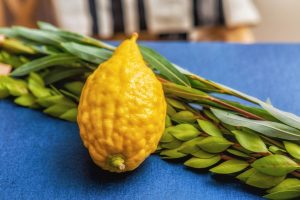 |
Etrog (citron)
A distinctive citrus fruit with a fragrant peel. It is held together with the other three species during the Sukkot ritual. |
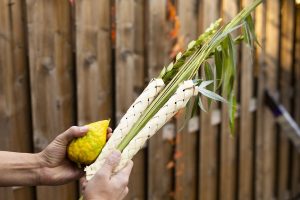 |
Lulav (date palm frond)
A palm branch that gives its name to the bound arrangement of palm, myrtle, and willow. |
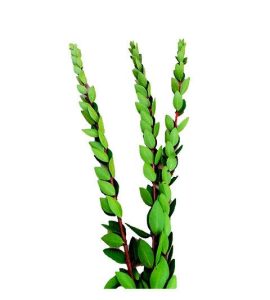 |
Hadassim (myrtle branches)
Three myrtle branches are traditionally included with the lulav. |
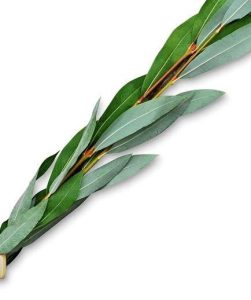 |
Aravot (willow branches)
Two willow branches complete the traditional combination. |
The Four Kinds are used during Sukkot according to established religious practices. They are held together and moved in different directions as part of the holiday observance.
Chabad explains that the Four Kinds express themes of unity and recognition of God’s presence.
These plants have a specific religious role. Decorative flowers, citrus accents, and ordinary palm foliage cannot replace the prescribed Four Kinds.
For example, lemons included in a Sukkot floral centerpiece may create an attractive visual reference to the harvest and the etrog, but they are not a substitute for a kosher etrog used in the holiday ritual.
This distinction matters when selecting holiday flowers. A beautiful arrangement can celebrate the season and complement the sukkah without being presented as a religious object.
At EsteeFlower, our Sukkot collection includes arrangements inspired by natural greenery, fresh citrus, and the joyful colors of the harvest.
These designs are created for holiday tables, home decoration, and thoughtful gifting.
Decorating for Sukkot: How to create a welcoming sukkah
Decorating for sukkot is one of the most enjoyable ways to prepare for the holiday. Unlike a formal dining room, a sukkah offers the freedom to work with natural textures, seasonal colors, and handmade decorations.
The goal is not simply to make the space look beautiful. It is to create a comfortable environment where family members and guests will want to spend time together.
A sukkah may be modest or elaborate, traditional or contemporary. Some families favor colorful decorations made by children, while others choose an elegant setting with coordinated linens, fresh flowers, and simple tableware.
Both approaches can create a warm and memorable celebration.
Begin with the sukkah itself
Before choosing flowers or decorative accents, consider the structure and purpose of the sukkah.
A traditional sukkah requires walls and a roof of appropriate s’chach, made from suitable natural plant materials. The s’chach is an essential part of the religious structure, not merely a decorative covering.
Flowers, garlands, fabric, and other ornaments should not be used in place of the required roofing material.
When planning overhead decorations or hanging planters, consult a reliable guide to sukkah construction and decoration to ensure that the additions do not interfere with its religious validity.
Chabad’s guidance on sukkah construction and decorations explains the relevant requirements.
Source: Chabad.
Once the structure is ready, consider how the space will be used throughout the week.
Will there be one main dining table or several smaller tables? Will children need room to move around? Is there enough space for guests to enter comfortably? Where will food and drinks be served?
These practical questions should guide every decorative decision.
Use natural elements to create a festive atmosphere
Among the most practical sukkot ideas is combining fresh flowers with other elements inspired by the harvest.
A neutral tablecloth can provide a calm background for colorful flowers and seasonal produce. Wooden serving boards, woven baskets, and natural greenery can help connect the table with the sukkah’s outdoor surroundings.
Citrus-inspired floral arrangements are particularly appealing because they introduce color and a fresh, natural appearance without requiring excessive decoration.
For a more restrained table, consider a compact arrangement of roses and hydrangeas surrounded by simple tableware.
For a larger gathering, use a central floral piece and smaller coordinating accents rather than covering the entire table with flowers.
The holiday is about sharing meals and welcoming guests, so there should always be enough space for everyone to sit comfortably.
Make room for children and family traditions
For many households, decorating the sukkah becomes a family tradition of its own.
Children may help prepare paper chains, drawings, ornaments, and other handmade decorations before the holiday. Some families preserve these creations and bring them out again in subsequent years.
Fresh flowers can become part of this shared experience. Children might help select the colors for the holiday table or choose where a prepared floral arrangement will be displayed.
For a family-oriented setting, place fragile vases and larger arrangements away from busy walkways and areas where children will be playing.
A stable basket or compact centerpiece can be especially useful when the sukkah serves as both a dining area and a gathering place.
Sukkot flowers: Choosing the right arrangement for your celebration
The best sukkot flowers are not necessarily the largest or most elaborate. The right choice depends on where the arrangement will be displayed, how many people will be seated nearby, and whether it is intended for your own home or as a gift.
At EsteeFlower, we offer a dedicated Sukkot collection that includes holiday centerpieces, citrus-inspired baskets, classic bouquets, and elegant arrangements for larger celebrations.
Our floral designs can complement a traditional family sukkah, a contemporary waterfront home, or a beautifully prepared holiday event.
Golden Etrog Basket: A joyful celebration of the harvest
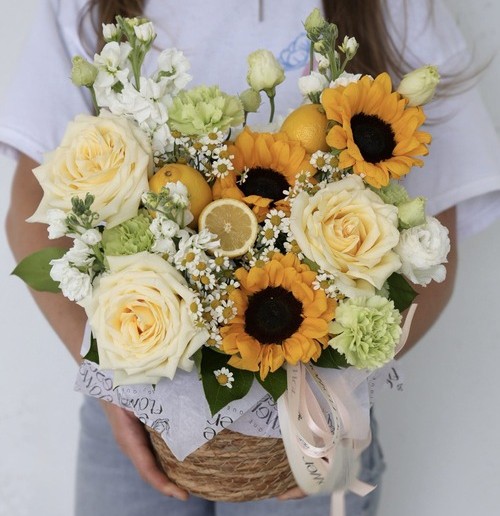
Golden Etrog Basket with Lemons, sunflowers, and garden roses
The Golden Etrog Basket brings together several elements that feel especially appropriate for Sukkot: fresh citrus, seasonal greenery, and flowers in a joyful white, yellow, and green palette.
The arrangement features lemons, sunflowers, garden roses, chamomiles, stock, and carnations in a woven basket.
Its citrus accents create a visual connection with the harvest and the holiday’s natural themes. The lemons are a decorative reference to the etrog, not a replacement for the ritual fruit.
The arrangement works beautifully as a centerpiece for a family dinner or as a welcoming accent near the entrance to a sukkah.
The woven basket also makes it an appealing host gift. Because the stems are arranged in floral foam, the flowers should remain in the basket.
Discover the Golden Etrog Basket.
Golden Etrog Basket Miami
Sukkot centerpiece with lemons and roses: A fresh accent for the holiday table
Sukkot centerpiece with lemons and roses
A holiday table often needs an arrangement that looks festive without taking up too much space.
Our Sukkot centerpiece with lemons and roses combines premium roses, lisianthus, seasonal flowers, greenery, and real lemons in a rounded basket design.
The citrus accents bring brightness to the table, while the roses and lisianthus give the arrangement a soft, refined appearance.
This design can suit a family meal, a smaller sukkah, or an intimate dinner where the centerpiece should enhance the setting without becoming the main attraction.
It is also a thoughtful choice for someone who has invited you to celebrate Sukkot at their home.
The arrangement is designed to remain in its basket, making it convenient to display without transferring the flowers into another container.
Explore the Sukkot centerpiece.
Flowers for Sukkot Miami
Citrus Garden and other elegant Sukkot arrangements
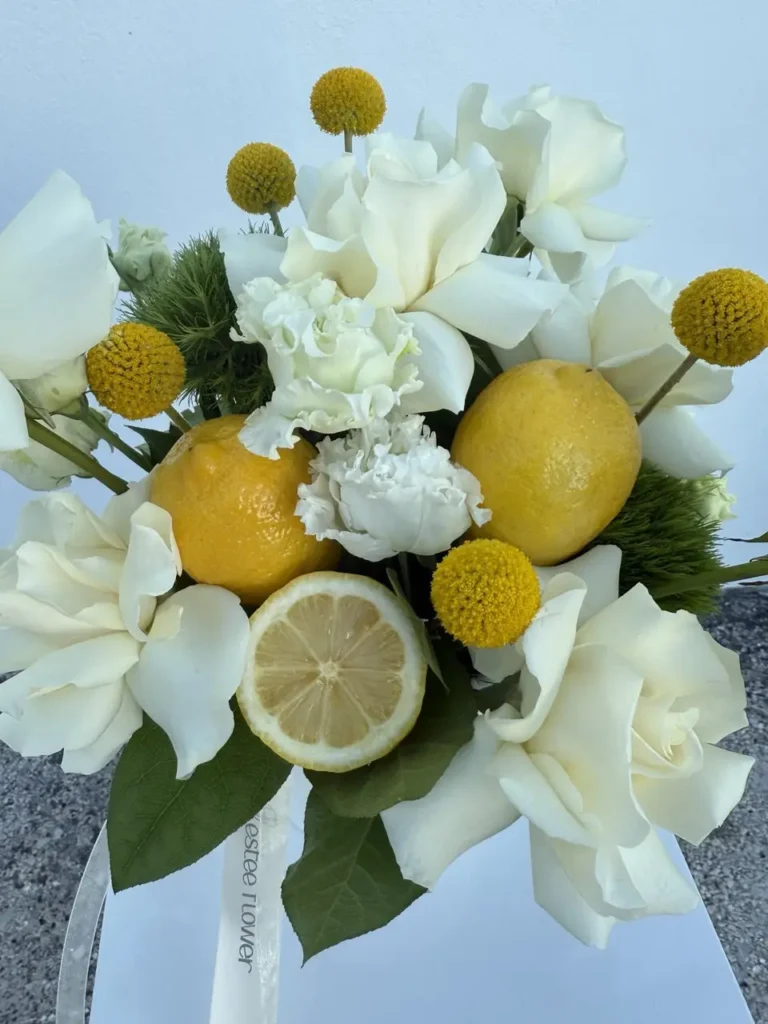
For a different floral expression, our Sukkot Bouquet Citrus Garden combines lemons, white hydrangeas, and roses.
The white flowers provide a calm, elegant foundation, while the citrus accents introduce a brighter seasonal touch.
This style can work particularly well in a contemporary sukkah with natural wood, light linens, and green foliage.
If you prefer a centerpiece without citrus, consider our Chag Sameach Table Centerpiece in a ceramic vase or the White & Blush Table Centerpiece.
Their softer floral appearance can complement a dining table decorated with neutral linens and restrained seasonal accents.
For a more expressive gift or an arrangement displayed away from the dining table, the Jerusalem of Gold Hat Box Arrangement offers another festive option from the Sukkot collection.
A classic bouquet is also appropriate when you are sending flowers to someone who will display them inside the home rather than directly in the sukkah.
Explore the full Sukkot collection.
Traditional Jewish flowers: Are certain blooms associated with Sukkot?
When people search for traditional jewish flowers, they may expect to find a specific list of blooms required for Jewish holidays.
In reality, different Jewish celebrations have different traditions, and there is no single flower that serves as a universal religious symbol for every occasion.
For Sukkot, the central botanical elements are the Four Kinds and the natural plant material used for the sukkah’s roof. Ordinary decorative flowers have a different purpose.
Roses, hydrangeas, sunflowers, chamomiles, and other fresh blooms can be used to beautify the sukkah, but none of these flowers is a required ritual element of Sukkot.
The distinction allows families to choose flowers that reflect their personal style while respecting the established traditions of the holiday.
Roses and garden roses
Roses are a versatile choice for holiday arrangements because they work with both traditional and contemporary interiors.
White and cream roses create a calm, refined atmosphere, while yellow and blush tones introduce warmth and color.
Garden roses have a particularly lush appearance that pairs naturally with greenery and woven baskets.
They can be used in a compact centerpiece, a larger floral arrangement, or a bouquet presented as a holiday gift.
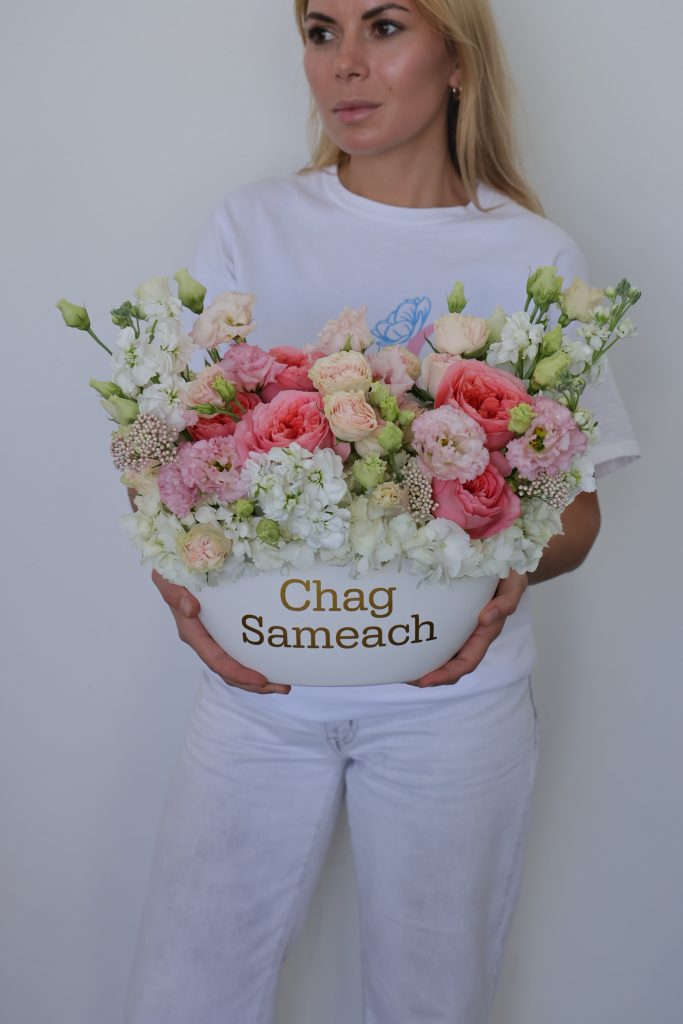
Chag Sameach Table Centerpiece (Ceramic Vase)
Hydrangeas and seasonal greenery
Hydrangeas add generous volume and softness to floral compositions.
White hydrangeas are especially attractive when paired with green foliage and neutral tableware. They can help create a cohesive look in a sukkah decorated with natural materials.
However, hydrangeas need reliable hydration and should be protected from direct sunlight, particularly in South Florida’s warm climate.
For a sukkah that receives strong afternoon sun, consider displaying a hydrangea arrangement indoors during the hottest part of the day when permitted by the household’s holiday practices.
Sunflowers and chamomiles
Sunflowers introduce a cheerful seasonal appearance that complements the agricultural themes of Sukkot.
Their golden petals create a natural contrast with green foliage and white or cream flowers.
Chamomiles contribute a smaller, more delicate floral texture that works well alongside garden roses and other seasonal blooms.
Together, these flowers can create an arrangement that feels fresh, welcoming, and connected to the harvest.
Our Golden Etrog Basket combines both sunflowers and chamomiles with citrus accents, garden roses, and other seasonal flowers.
The result is a festive design inspired by the holiday’s natural setting rather than an invented religious flower tradition.
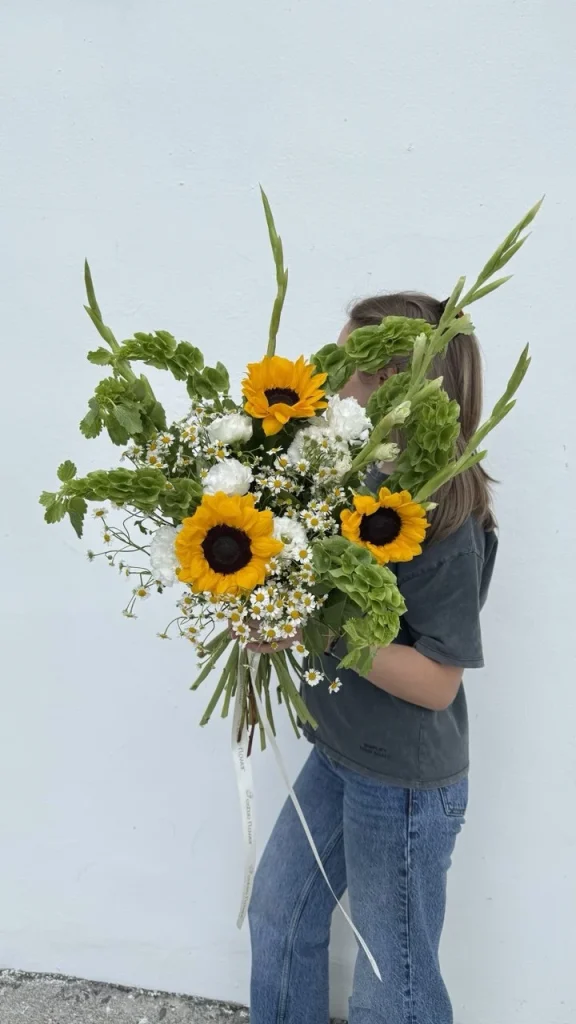
Green and Yellow Arrangement “Mint Lemonade” with Seasonal Flowers
Sukkot table decorations: Beautiful and practical ideas for holiday meals
The Sukkot table is more than a decorative surface. It is where guests gather, blessings are recited, food is shared, and conversations unfold.
A successful table setting should feel welcoming from the moment guests arrive and remain comfortable throughout the meal.
This is particularly important during Sukkot, when a family may use the same outdoor dining space repeatedly over seven days.
| Setting | Recommended floral approach |
|---|---|
| Intimate family sukkah | A compact citrus or rose centerpiece |
| Dinner for six to ten guests | A rounded basket arrangement with balanced volume |
| Long holiday dining table | One principal centerpiece with smaller floral accents |
| Sukkah entrance | A welcoming basket or larger decorative arrangement |
| Indoor living room | A classic bouquet or elegant hat box |
| Community celebration | Coordinated table arrangements sized for the venue |
The most important consideration is proportion.
A centerpiece should make the table feel prepared for the holiday while preserving the comfort of everyone gathered around it.
Creating an elegant table in a South Florida sukkah
Miami’s tropical environment creates both opportunities and challenges for outdoor holiday decorating.
A sukkah may receive strong sunlight during the day, experience humid conditions in the evening, or be exposed to sudden rain and gusts of wind.
Choose stable containers, position arrangements away from the edges of tables, and avoid placing delicate flowers directly beneath concentrated sunlight.
Fresh flowers generally last longer when they are protected from excessive heat and receive appropriate hydration.
If you are using a floral-foam arrangement, follow the florist’s care instructions and keep the arrangement in its original container.
For a hand-tied bouquet, prepare a suitable vase and fresh water before the holiday begins.
When planning the table, consider the full environment: the placement of chairs, access to food, the movement of guests, and the availability of shaded areas.
An arrangement that looks beautiful in an indoor photograph may need a different location to remain attractive and secure in an outdoor sukkah.
Gifts for Sukkot: Thoughtful ways to celebrate with family and friends
Sukkot is closely connected with hospitality. Families welcome relatives, neighbors, and friends into their sukkahs, often sharing multiple meals throughout the festival.
If you have been invited to a Sukkot dinner, bringing a thoughtful gift is a lovely way to express gratitude to your host.
Fresh flowers are a particularly versatile choice because they can be enjoyed throughout the holiday and displayed either inside the sukkah or in the family home.
When should you send Sukkot flowers?
For a traditionally observant family, the timing of a flower delivery is particularly important.
In 2026, Sukkot begins on Friday evening, September 25. This means that the first evening of the holiday coincides with the beginning of Shabbat.
Consider arranging delivery on Thursday, September 24, or early on Friday, September 25, with sufficient time for the recipient to receive and arrange the flowers before sundown.
If you are sending a hand-tied bouquet, remember that placing freshly cut flowers into water on Shabbat or Yom Tov may involve religious restrictions observed by the recipient.
A ready-to-display arrangement delivered in advance can reduce the need for last-minute preparation.
During Chol Hamoed, flower deliveries may be easier to coordinate, although individual observance and holiday schedules vary.
When sending flowers to an observant household, it is always considerate to confirm that the recipient can accept the delivery at the proposed time.
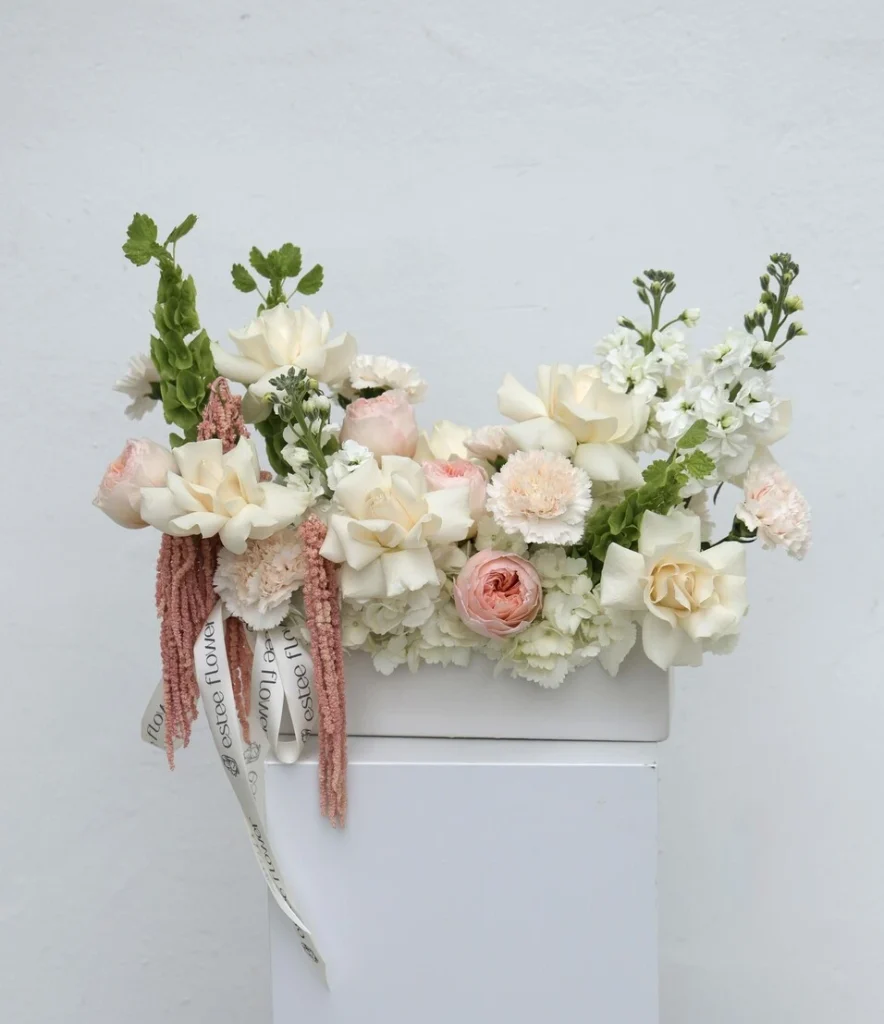
White & Blush Seder Table Centerpiece
What should you write on a Sukkot gift card?
A simple, sincere message is often the most appropriate choice.
You might write:
“Chag Sameach! Wishing you and your family a joyful Sukkot filled with love, beautiful moments, and cherished time together.”
For a host, a more personal message could be:
“Thank you for welcoming us into your sukkah. Wishing your family a wonderful holiday filled with happiness and blessings.”
If you are sending flowers to someone you will not be able to visit, consider:
“Chag Sameach! Sending love and warm wishes for a joyful Sukkot. May your home be filled with happiness and the company of those you love.”
A personal greeting adds meaning to the arrangement and helps the recipient feel remembered during the holiday.
Traditional food for Sukkot: Celebrating the harvest around the table
Food plays an important role in Sukkot celebrations. Throughout the holiday, families gather for festive meals, welcome guests, and enjoy dishes that reflect their own culinary traditions.
Unlike Passover, Sukkot does not have a single prescribed holiday menu. Many families prepare their favorite Jewish dishes, while others incorporate seasonal fruits, vegetables, and recipes passed down through generations.
The holiday’s connection with the harvest makes meals particularly meaningful. The table becomes a place to appreciate the food that has been gathered, the people who prepared it, and the opportunity to share it with others.
What foods are traditionally eaten during Sukkot?
Traditional food for sukkot varies across Jewish communities and family backgrounds.
Stuffed vegetables are a familiar choice in many households. Stuffed cabbage, peppers, or other vegetables can be prepared in advance and served as part of a festive meal.
Orthodox Union includes stuffed cabbage among the Jewish dishes often served during Sukkot.
Source: Orthodox Union.
Challah, wine or grape juice for Kiddush, and festive family dishes are also familiar elements of holiday meals. During the early part of Sukkot, some families continue the custom of dipping challah in honey that began during Rosh Hashanah.
Source: Chabad.
Seasonal fruits and vegetables can contribute to the harvest atmosphere, while the specific dishes served depend on family customs.
For families in South Florida, a holiday meal may combine traditional Jewish recipes with fresh produce and dishes suited to the warm climate.
The important thing is not to create a menu that looks a certain way. It is to prepare a meal that respects the family’s traditions and brings people together.
Decorating the table without crowding the food
When planning floral decorations for a Sukkot meal, consider what will actually be served.
A table with several shared dishes needs more open space than one with individually plated courses.
If the meal includes large serving platters, place a compact floral arrangement at the center or use smaller arrangements at the ends of the table.
Our Sukkot centerpiece with lemons and roses can provide a festive accent without requiring an elaborate surrounding display.
For a larger gathering, a Golden Etrog Basket can be positioned on a separate serving table or at the entrance to the sukkah.
Decorative lemons and other fruits incorporated into a professional floral arrangement should not be assumed to be suitable for eating.
For a kosher-observant household, confirm that any edible gifts or packaged foods meet the recipient’s dietary requirements.
The flowers should enhance the atmosphere while allowing the meal and the people sharing it to remain the focus.
Sukkot flower delivery in Miami and South Florida
Planning flowers for Sukkot is easier when the arrangements arrive before the holiday and are ready for their intended setting.
At EsteeFlower, we offer handcrafted bouquets and floral arrangements for holiday celebrations, family gatherings, and special occasions throughout Miami and surrounding South Florida communities.
Our Sukkot collection includes citrus-inspired centerpieces, floral baskets, elegant bouquets, and arrangements suitable for both holiday hosting and gifting.
Whether you are decorating your own sukkah or sending a thoughtful surprise to someone you love, choosing the right arrangement and delivery date helps ensure that the flowers arrive at an appropriate time.
Sukkot flowers for Miami, Hollywood, Hallandale Beach, and Aventura
EsteeFlower provides flower delivery across Miami and neighboring areas, including Hollywood, Hallandale Beach, Aventura, Sunny Isles Beach, North Miami, Miami Beach, Bal Harbour, Fort Lauderdale, Brickell, Downtown Miami, Coral Gables, and other nearby communities.
Check your delivery fee by ZIP code before placing your order. The final delivery fee will also be confirmed at checkout.
We offer same-day flower delivery in Miami, subject to order timing, product availability, and delivery arrangements.
For Sukkot, pre-ordering is especially helpful when you need a particular centerpiece, are preparing several tables, or want delivery before the first evening of the holiday.
If you are ordering flowers for a synagogue, restaurant, hotel, or community gathering, include the venue’s receiving instructions and the appropriate contact person.
For residential deliveries, provide the recipient’s full address, apartment or unit number, telephone number, and any necessary building access information.
Our main store is located at 3505 S Ocean Dr, Hollywood, FL 33019.
Explore our Sukkot flower arrangements.
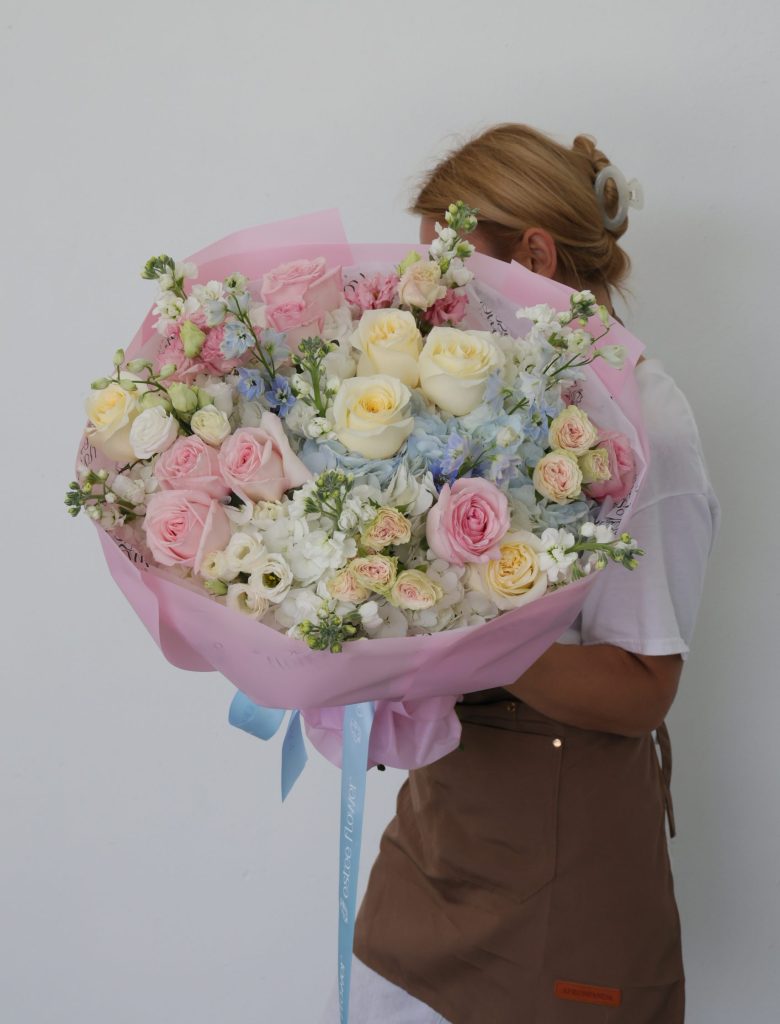
Seaside Vibes bouquet with hydrangeas, garden roses, delphinium, lisianthus, and stock
Flowers for synagogue gatherings and community celebrations
Community celebrations often require a different approach from a family dinner.
Larger dining areas may benefit from coordinated floral arrangements that create a consistent appearance without obstructing seating or service.
For a synagogue-sponsored meal, consider compact centerpieces that leave enough room for food, tableware, and guests.
A larger floral basket can be placed near the entrance or in a reception area where it provides a welcoming decorative accent.
When decorating a synagogue or a communal sukkah, coordinate with the organizer or rabbi regarding the placement of flowers, the holiday schedule, and any relevant requirements.
For events held in Miami restaurants, hotels, or private venues, consider the available space and the length of the celebration before choosing an arrangement.
A carefully planned floral design can bring warmth to the gathering while remaining practical for the people attending it.
From Rosh Hashanah to Sukkot: Welcoming the new year with flowers
Sukkot arrives shortly after Rosh Hashanah and Yom Kippur, creating a meaningful transition from the reflective days of the Jewish New Year to a celebration centered on joy and gratitude.
For many families, the holiday season unfolds through a series of gatherings. A festive Rosh Hashanah dinner is followed by the solemn observance of Yom Kippur, and then preparations begin for Sukkot.
Fresh flowers can become a beautiful part of this seasonal rhythm.
An elegant arrangement may welcome guests for Rosh Hashanah, while a brighter, harvest-inspired centerpiece brings a different atmosphere to the Sukkot table.
For more inspiration on Jewish New Year flowers, holiday traditions, and thoughtful gifts, explore our Rosh Hashanah guide.
You can also explore our guide to Jewish holiday flowers in Miami, including floral ideas for Shabbat, Shavuot, Passover, and other family celebrations.
Each holiday has its own religious meaning and customs. Flowers offer a way to create a welcoming environment that reflects the character of the occasion.
Frequently asked questions about Sukkot flowers and traditions
What is the meaning of Sukkot?
Sukkot is a seven-day Jewish festival commemorating God’s protection of the Israelites during their journey through the wilderness after the Exodus from Egypt. It also celebrates the agricultural harvest and emphasizes joy, gratitude, and hospitality.
When does Sukkot begin in 2026?
Sukkot begins at sundown on Friday, September 25, 2026, and ends after nightfall on Friday, October 2. The festival is followed by Shemini Atzeret and Simchat Torah, which are observed on October 3 and 4 in the Diaspora.
What flowers are appropriate for Sukkot?
Roses, garden roses, hydrangeas, sunflowers, chamomiles, and seasonal flowers can all work beautifully for Sukkot decorations. There is no specific decorative flower required by Jewish law. Choose blooms that complement the sukkah, the holiday table, and the host’s personal style.
Can you decorate a sukkah with flowers?
Yes. Fresh flowers and other decorative elements can be used to beautify a sukkah. They should not replace the required s’chach or interfere with the structure’s religious requirements. Consult an appropriate Jewish authority when planning substantial overhead decorations or installations attached to the sukkah.
Is an etrog the same as a lemon?
No. An etrog is a citron, a specific citrus fruit used in the Four Kinds ritual. A lemon may be used as a decorative element in a Sukkot floral arrangement, but it cannot replace the required etrog.
Are flowers a good gift for Sukkot?
Yes. Fresh flowers make a thoughtful gift for someone hosting a holiday meal or celebrating with family and friends. A ready-to-display basket, elegant centerpiece, or classic bouquet can bring warmth and color to the recipient’s home or sukkah.
Can I order Sukkot flowers for delivery in Miami?
Yes. EsteeFlower offers flower delivery in Miami and surrounding South Florida communities, including Hollywood, Hallandale Beach, Aventura, Sunny Isles Beach, and Miami Beach. For Sukkot 2026, we recommend arranging delivery before the holiday begins on Friday evening, September 25, especially when sending flowers to an observant household.
Celebrate Sukkot with fresh flowers from EsteeFlower
Sukkot reminds us that some of life’s most meaningful moments happen in simple surroundings, when family and friends gather, share food, and enjoy one another’s company.
A sukkah may stand for only a week, but the warmth of the people inside it can make the holiday unforgettable.
Fresh flowers bring a special beauty to these gatherings. A basket of sunflowers and garden roses, a citrus-inspired centerpiece, or a delicate bouquet can make the holiday table feel welcoming and full of life.
At EsteeFlower, we create floral arrangements that complement the joy and natural beauty of Sukkot, from intimate family dinners to larger holiday celebrations across Miami and South Florida.
Explore our Sukkot flower collection and choose an arrangement that will make your celebration even more memorable.
Chag Sameach! May your Sukkot be filled with happiness, gratitude, and beautiful moments shared with the people you love.